A deeper attack-surface review
Go beneath the UI into native components and scoped browser research.

04 / VULNERABILITY RESEARCH & PRODUCT SECURITY
Move from code analysis to experiments on a device. Djini combines native research, fuzzing, and PoC development, with Research Lab workflows for deeper WebKit and Chrome investigations.
You ask Djini
“Investigate this browser or native component. Develop a test for the suspected weakness and show whether the resulting exploit path works on the target device.”
What your team gets
A research record connecting the code, experiment, device result, and reproduction material for technical review.
Access & scope
Native research is in the Research plan. Scope browser Research Lab workflows with the enterprise team.
THE WORK BEHIND THE OUTCOME
The difficult work is reaching the behavior, understanding the primitive, and checking what it enables on the target. Research Lab and Device Lab connect those stages so an idea can be tested against the environment it is meant to affect.
Choose a native component or scope an enterprise browser investigation. Establish the relevant build and device environment.
Use code analysis and fuzzing to investigate the attack surface. Build focused inputs or a harness around the behavior being tested.
Run the experiment on the target environment. Investigate how a weakness interacts with other components and what would be required for a working chain.
Keep the PoC, traces, target version, and reproduction details together. Use that evidence for internal remediation or coordinated disclosure.
INSIDE DJINI
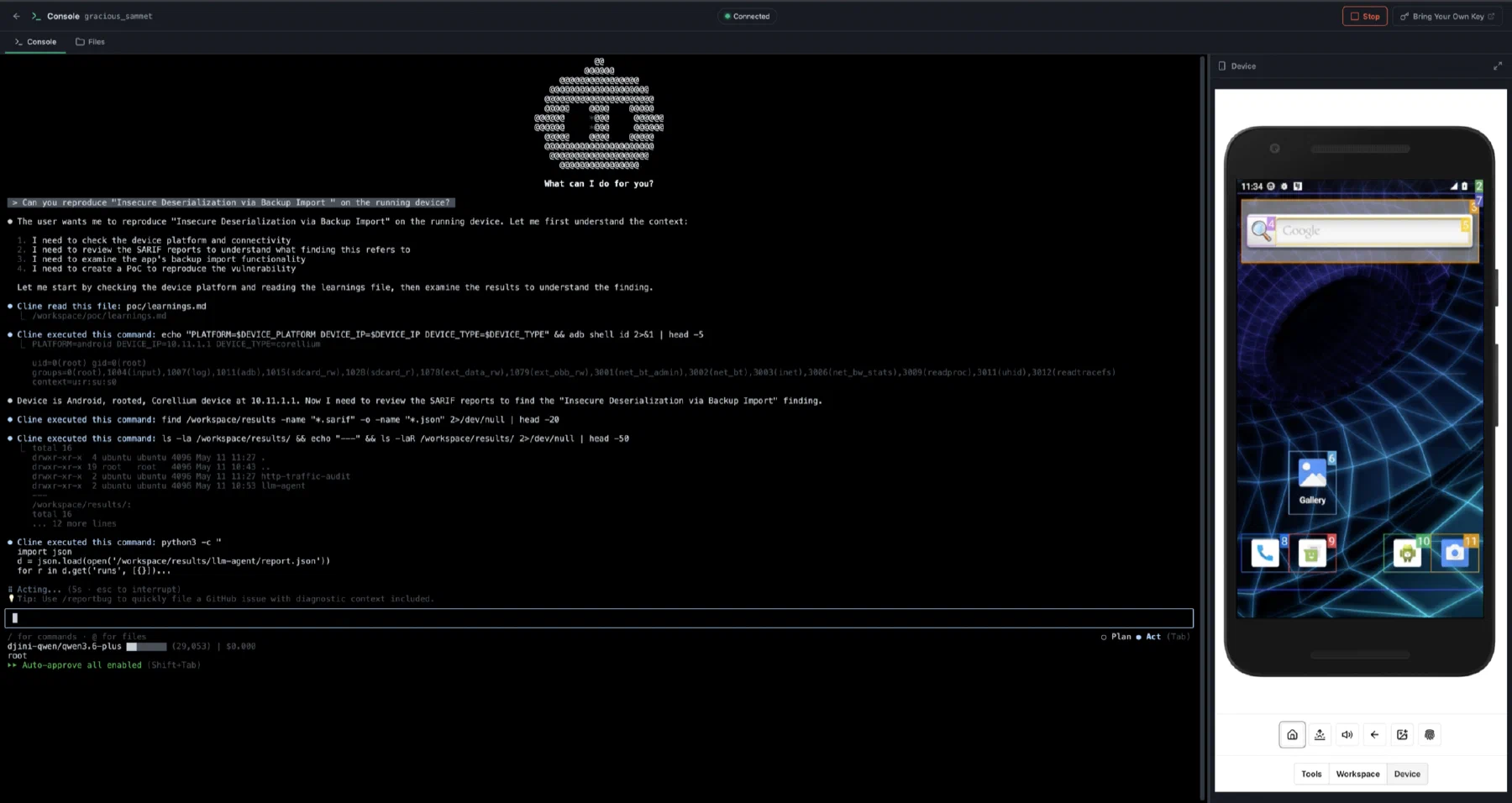
Use the Djini workspace to move between an agent’s analysis, command execution, and the device. The product view below shows the underlying investigation environment.
WHAT YOUR TEAM TAKES AWAY
Go beneath the UI into native components and scoped browser research.
Connect proposed behavior to an experiment on the target environment.
Keep the PoC and device evidence usable by the engineers who need to assess the issue.
Built by researchers. Proven in the arena.
Pwn2Own Ireland · October 2026
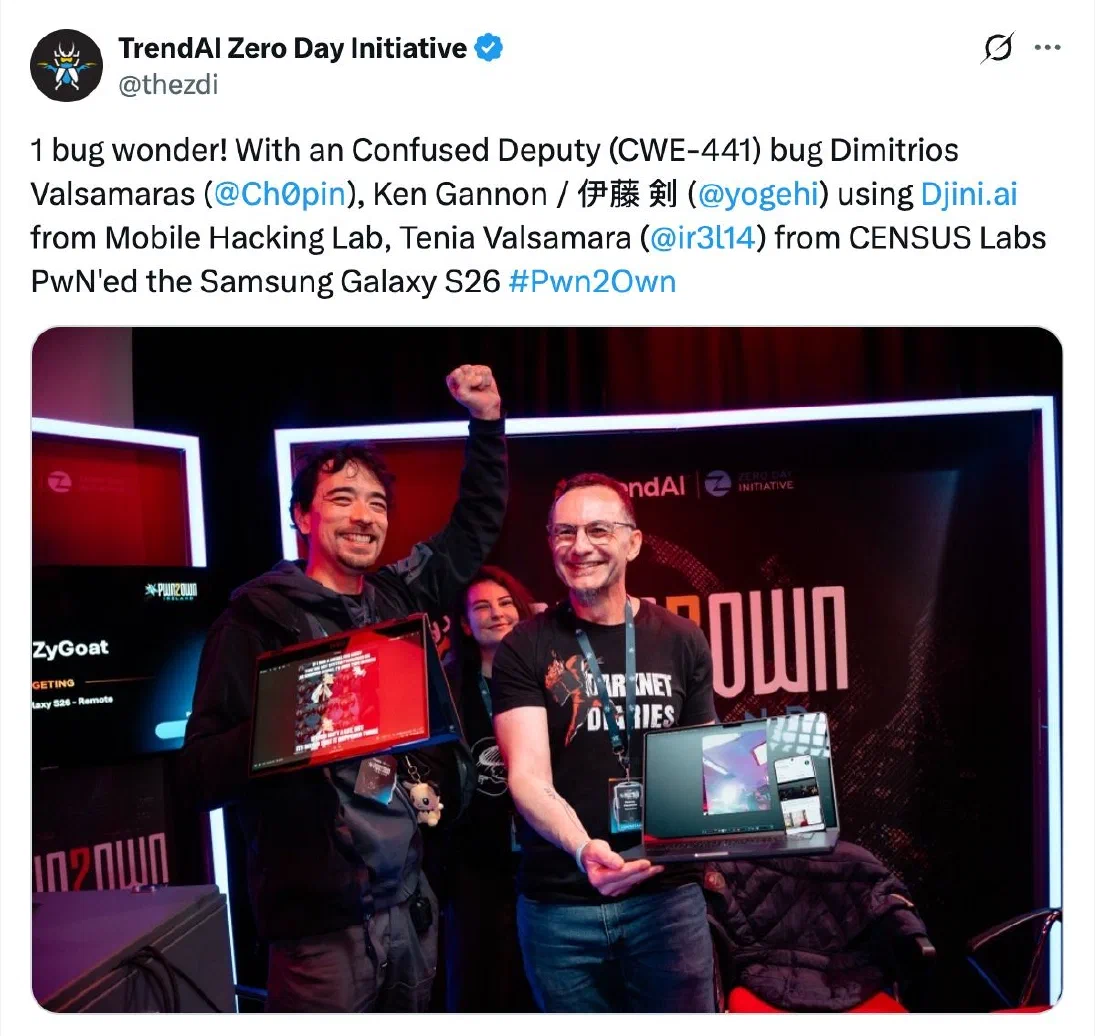
At Pwn2Own Ireland 2026, researchers used Djini.ai in successful demonstrations against two flagship phones. ZDI named Djini in the official results.
Research by Dimitrios Valsamaras, Ken Gannon of Mobile Hacking Lab, and Tenia Valsamara of CENSUS Labs. Photo and result reporting: TrendAI Zero Day Initiative. Awards recognise the researchers' demonstrated results.
A few good questions
The Research Bundle includes native-code analysis, coverage-guided fuzzing, autonomous PoC building and testing, and BYOD alongside AppSec platform features. Choose Android Userland Fuzzing & Exploitation or iOS Userland Fuzzing & Exploitation training. Yearly billing saves 20%: €2,400 per year.
Book an enterprise discussion to scope the target, device environment, and Research Lab workflow. Browser research is not presented as an entitlement of the standard Research subscription.
No. Exploitability depends on the target and the evidence. Use the workflow to develop and test hypotheses, and distinguish a reproduced result from a lead that still needs investigation.
PUT DJINI TO WORK
Scope browser research with the team. Native research is available in the Research plan.
THIS WORKFLOW, IN YOUR INDUSTRY